
Contributor, The Bold Opinion
With sharp intentionality, this theme strips the social media algorithms and search engines of their hyper-sexualized adult categorization and gives it new meaning.
By grounding the exhibition in the single-word prompt of “Grown,” the artists on display do something far more complex than just exhibiting talent: they create for us, a 3D model of Black female maturity. The exhibition succeeds brilliantly, because it refuses to treat adulthood as a monolith, categorizing its works across a triptych of memory, reclamation, and evolution.
Artist-curator Kaylah Hagler’s second annual “The Young Hot Ebony Women’s Group Art Show” opened with a formidable, packed gallery. Transcendent vibes and art lovers poured out of the open doors to Nina Baldwin’s Gallery, alerting passersby that something special is at play. The atmosphere was vibrant with music, chatter, and a steady flow of people moving in and out and around the gallery space.
In the lexicon of the Black experience, the word ‘grown’ carries cultural weight most understand. Calling a young Black girl “grown” has long served to police behavior or hyper-sexualize a young girl. A premature stripping away of innocence and occasionally, a distorted attempt at protection. When aimed at an adult, the term can become a statement of jest, freedom, and/or responsibility. Inside Castleberry Hill’s Nina Baldwin Gallery, “Grown” is not weaponized as a reprimand or used-tool of shame. Instead, it’s celebrated as a declaration and documentation of women’s autonomy and memory.
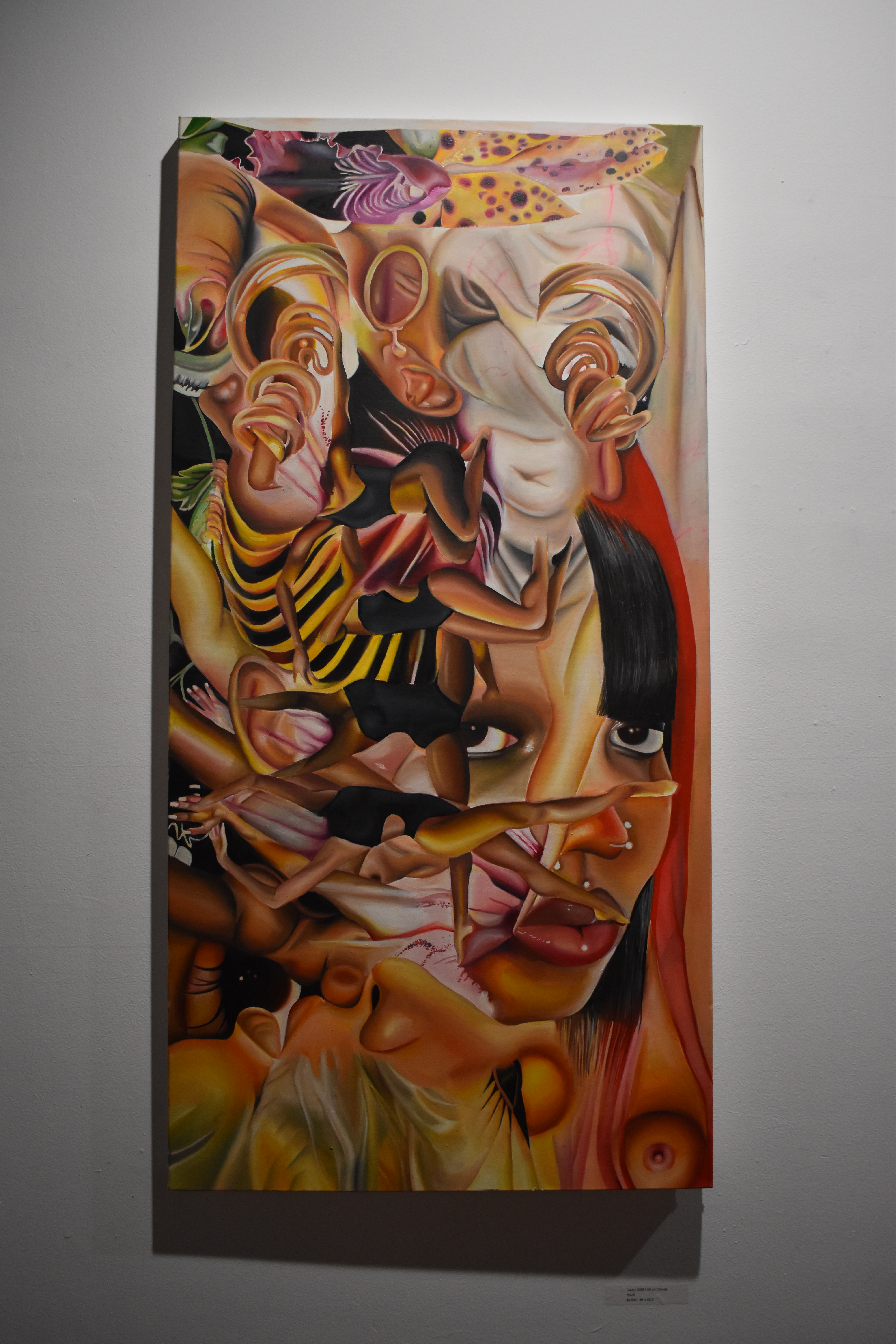
The artist confronts the gaze that has historically policed and fetishized young Black women. Naked body parts, dancing figures, and faces become a surreal jumble of puzzle pieces so that the piece is not viewed as whole, but rather, as a fragmented—out of order— in the steamiest way.
Rather than asking for permission to occupy the space, these pieces command it. The figures on the canvas aren’t being looked at; they are looking back, fully aware of their power, a monument of self-definition.

(
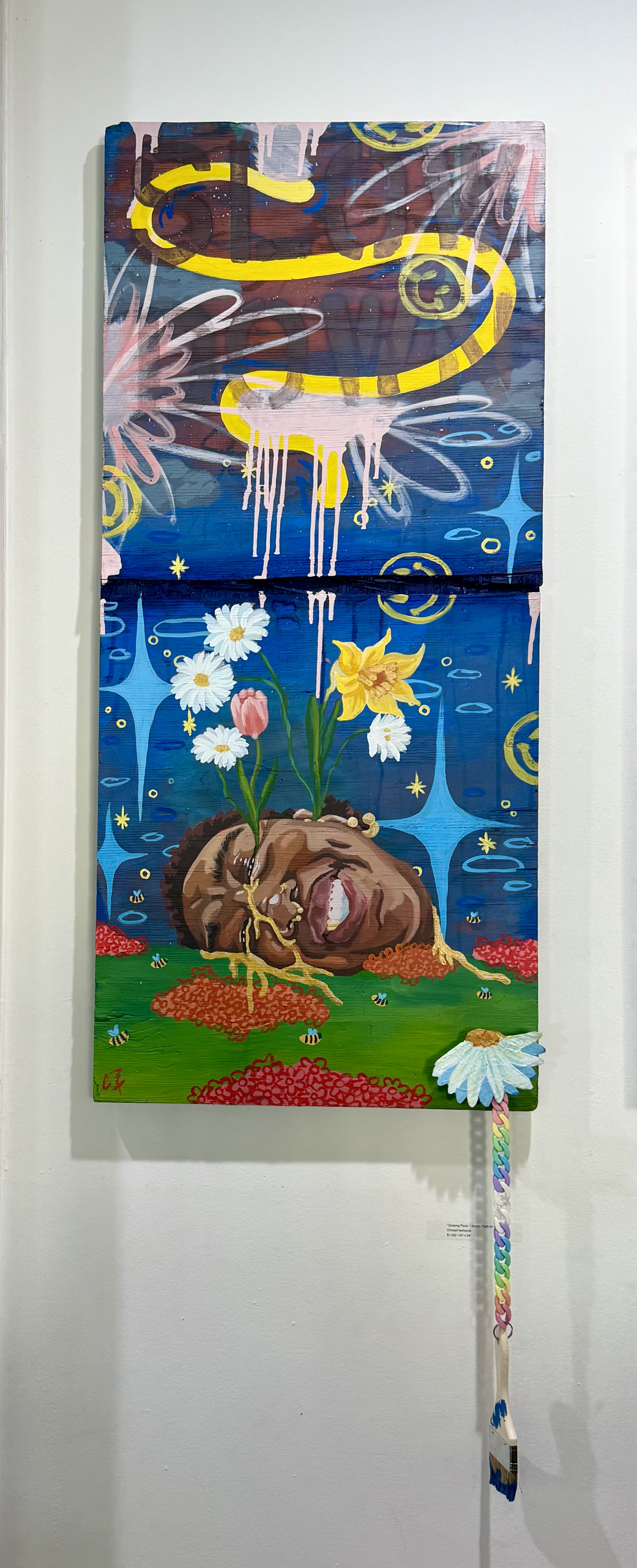
Maturity in this exhibition isn’t just thematic— It’s a testimony of artistic evolution. There is confidence in the brushstrokes and color choices here. The artists use scale and texture, masterfully, proving that their conceptual maturity is perfectly matched by their command over their craft.
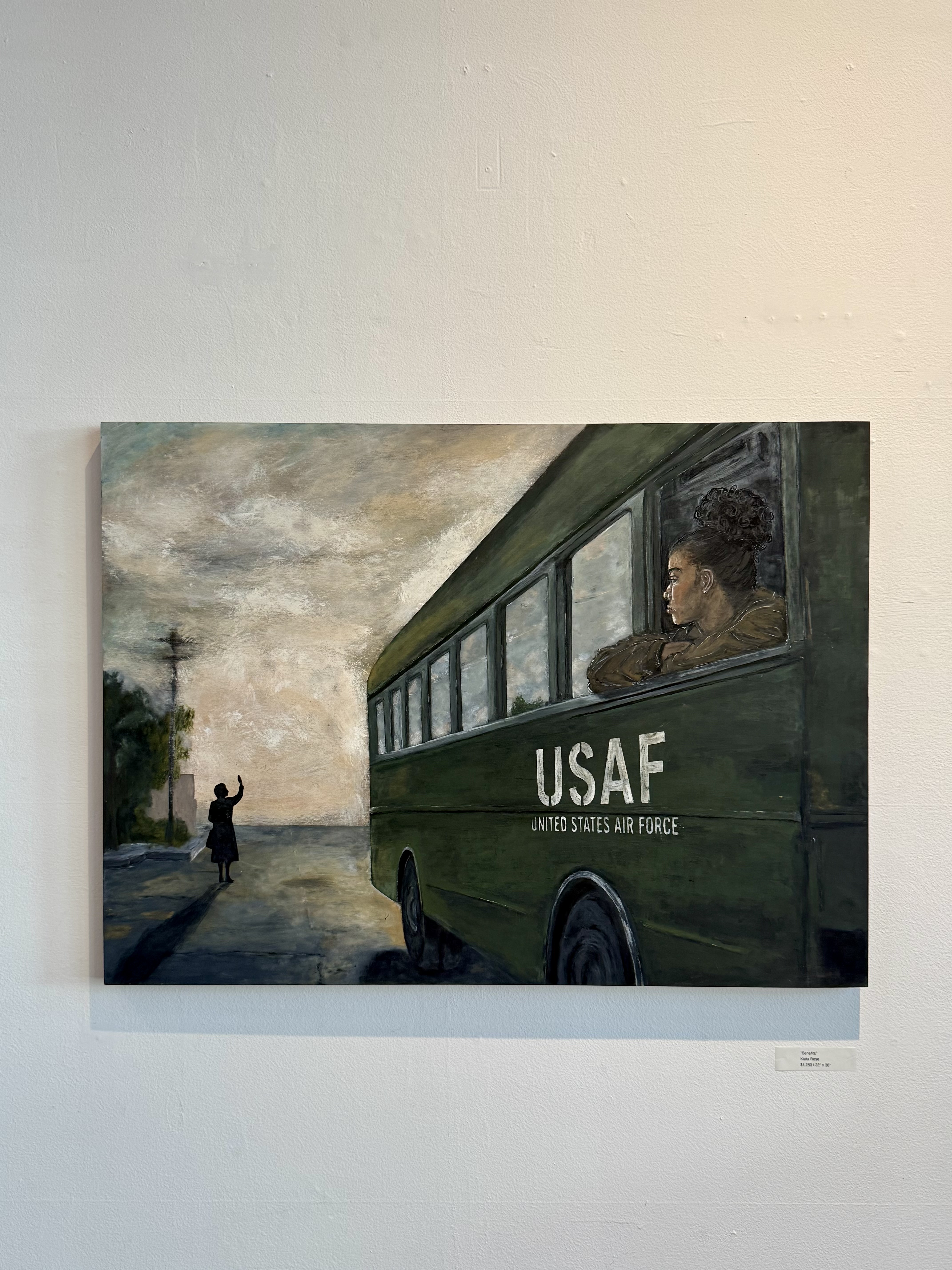
The exhibition’s true emotional weight lies in its willingness to sit with the shadows. Adulthood is rarely a smooth transition. Keita Rose paints this truth palpably, capturing the friction, burdens, and bittersweet emotions of coming of age. Quiet and powerful, her piece is a somber reflection of “goodbye.” Leaving home to embark on a new journey into the not-yet-known life in the U.S. service. Her use of dark colors and army green feels moody and grounded.
This show avoids the trap of shallow empowerment and offers instead, a raw, deeply resonant truth about what it costs to survive one’s own evolution.
Exiting onto Peters Street, in the midnight air, it becomes clear that “Grown” is not a static destination or an age on an ID card. It is a continuous, unfolding process of growth— taking-in, breaking down, building up, and the beautiful exploration of autonomy.
“I want the community to know how important true connection and good effort at being connected is… I want people to make sure that they’re looking back at their sisters and recognizing that they’re your sister, you know. She’s still there,” said Kaylah Hagler. “That’s really important for me as an artist. We can’t forget about each other. We’re all human beings first and then we’re artists,” she added.
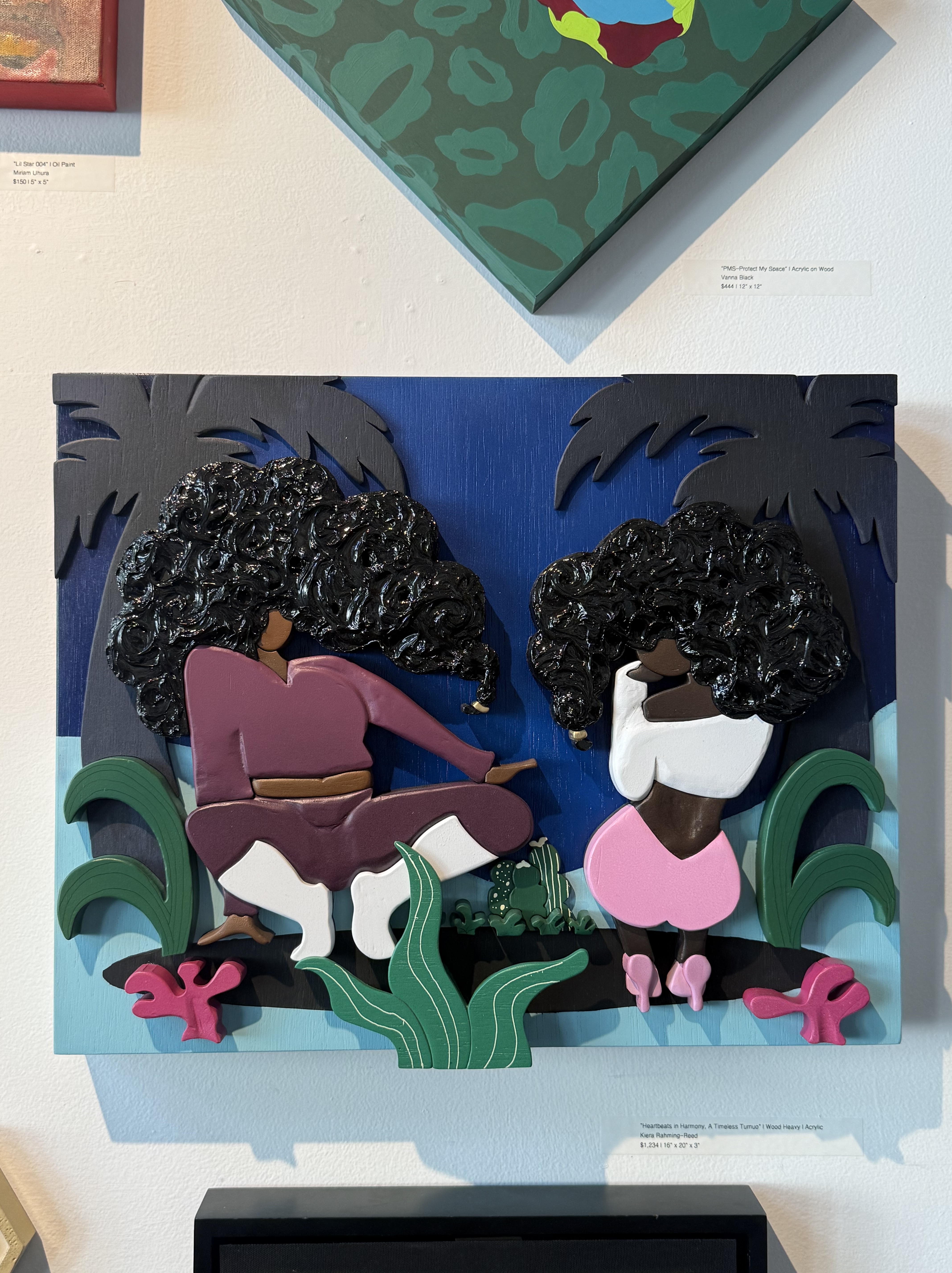
The Young Hot Ebony Women’s Group Art Show will be at the Nina Baldwin Gallery until August 4th, 2026.

