With sharp intentionality, this theme strips the social media algorithms and search engines of their hyper-sexualized adult categorization and gives it new meaning.
By grounding the exhibition in the single-word prompt of “Grown,” the artists on display do something far more complex than just exhibiting talent: they create for us, a 3D model of Black female maturity. The exhibition succeeds brilliantly, because it refuses to treat adulthood as a monolith, categorizing its works across a triptych of memory, reclamation, and evolution.
Artist-curator Kaylah Hagler’s second annual “The Young Hot Ebony Women’s Group Art Show” opened with a formidable, packed gallery. Transcendent vibes and art lovers poured out of the open doors to Nina Baldwin’s Gallery, alerting passersby that something special is at play. The atmosphere was vibrant with music, chatter, and a steady flow of people moving in and out and around the gallery space.
In the lexicon of the Black experience, the word ‘grown’ carries cultural weight most understand. Calling a young Black girl “grown” has long served to police behavior or hyper-sexualize a young girl. A premature stripping away of innocence and occasionally, a distorted attempt at protection. When aimed at an adult, the term can become a statement of jest, freedom, and/or responsibility. Inside Castleberry Hill’s Nina Baldwin Gallery, “Grown” is not weaponized as a reprimand or used-tool of shame. Instead, it’s celebrated as a declaration and documentation of women’s autonomy and memory.
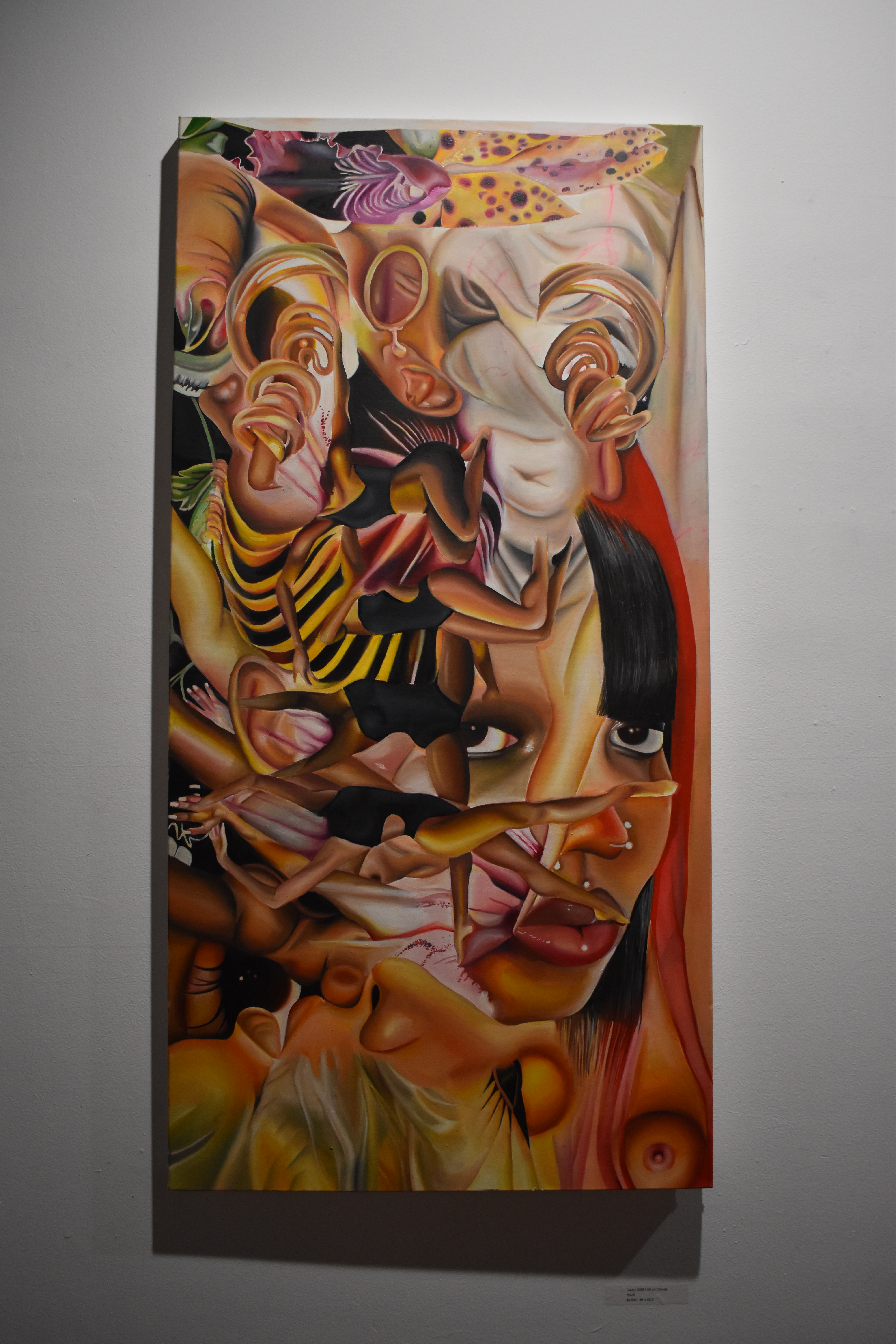
“Jazz” Naja
The artist confronts the gaze that has historically policed and fetishized young Black women. Naked body parts, dancing figures, and faces become a surreal jumble of puzzle pieces so that the piece is not viewed as whole, but rather, as a fragmented—out of order— in the steamiest way.
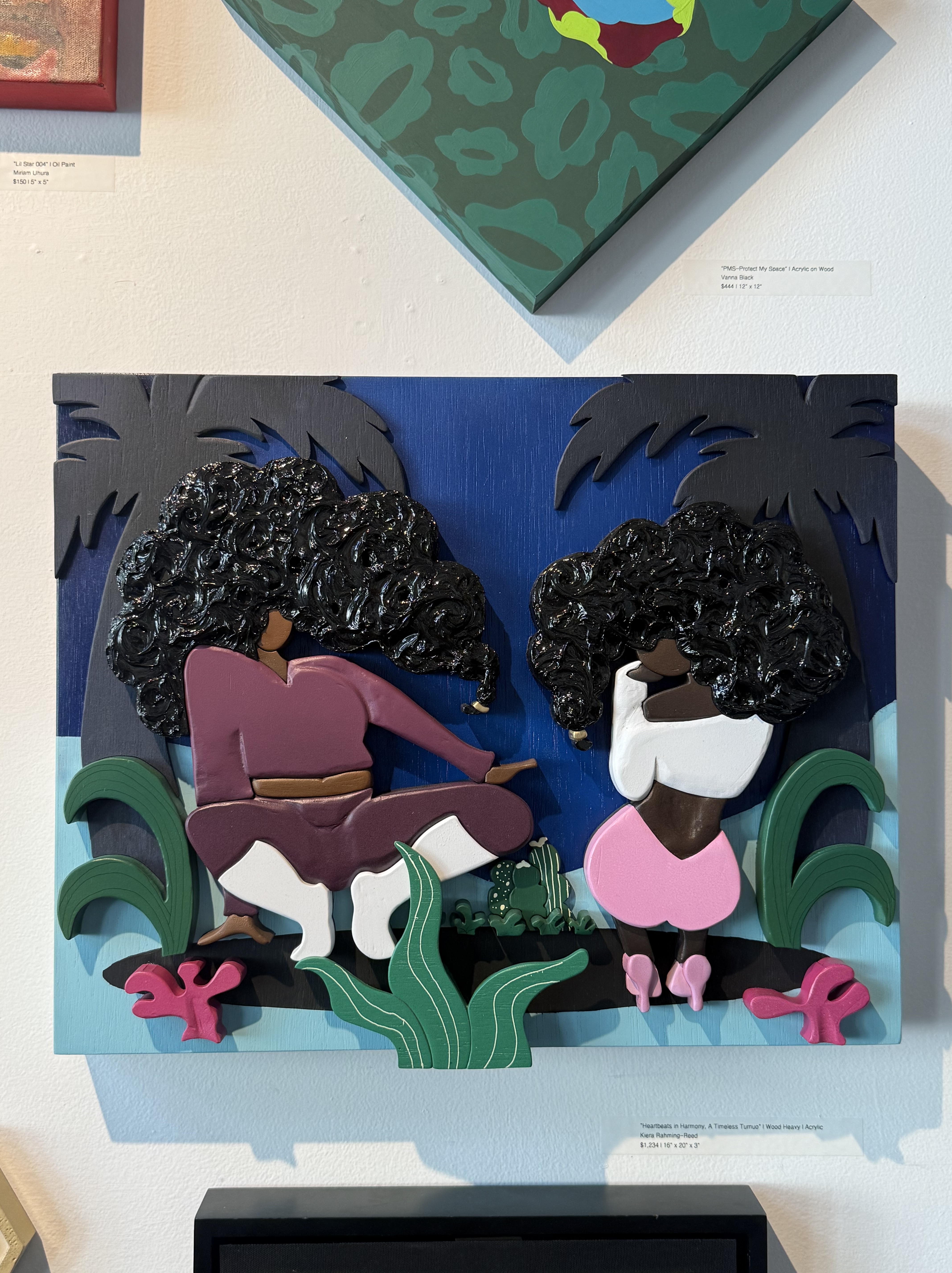
Rather than asking for permission to occupy the space, these pieces command it. The figures on the canvas aren’t being looked at; they are looking back, fully aware of their power, a monument of self-definition.
“How You See Yourself” Kaylah Hagler
(
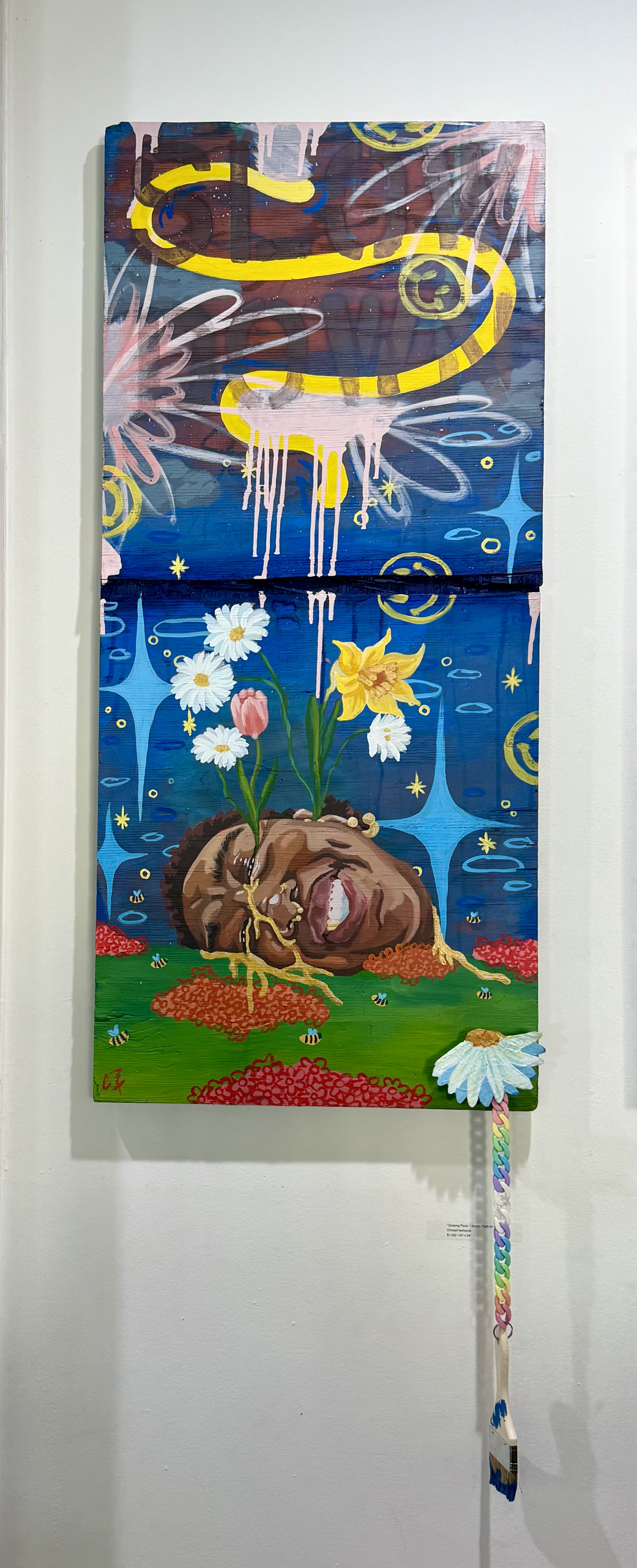
“Growing Pains” ChristaFreehands
Maturity in this exhibition isn’t just thematic— It’s a testimony of artistic evolution. There is confidence in the brushstrokes and color choices here. The artists use scale and texture, masterfully, proving that their conceptual maturity is perfectly matched by their command over their craft.
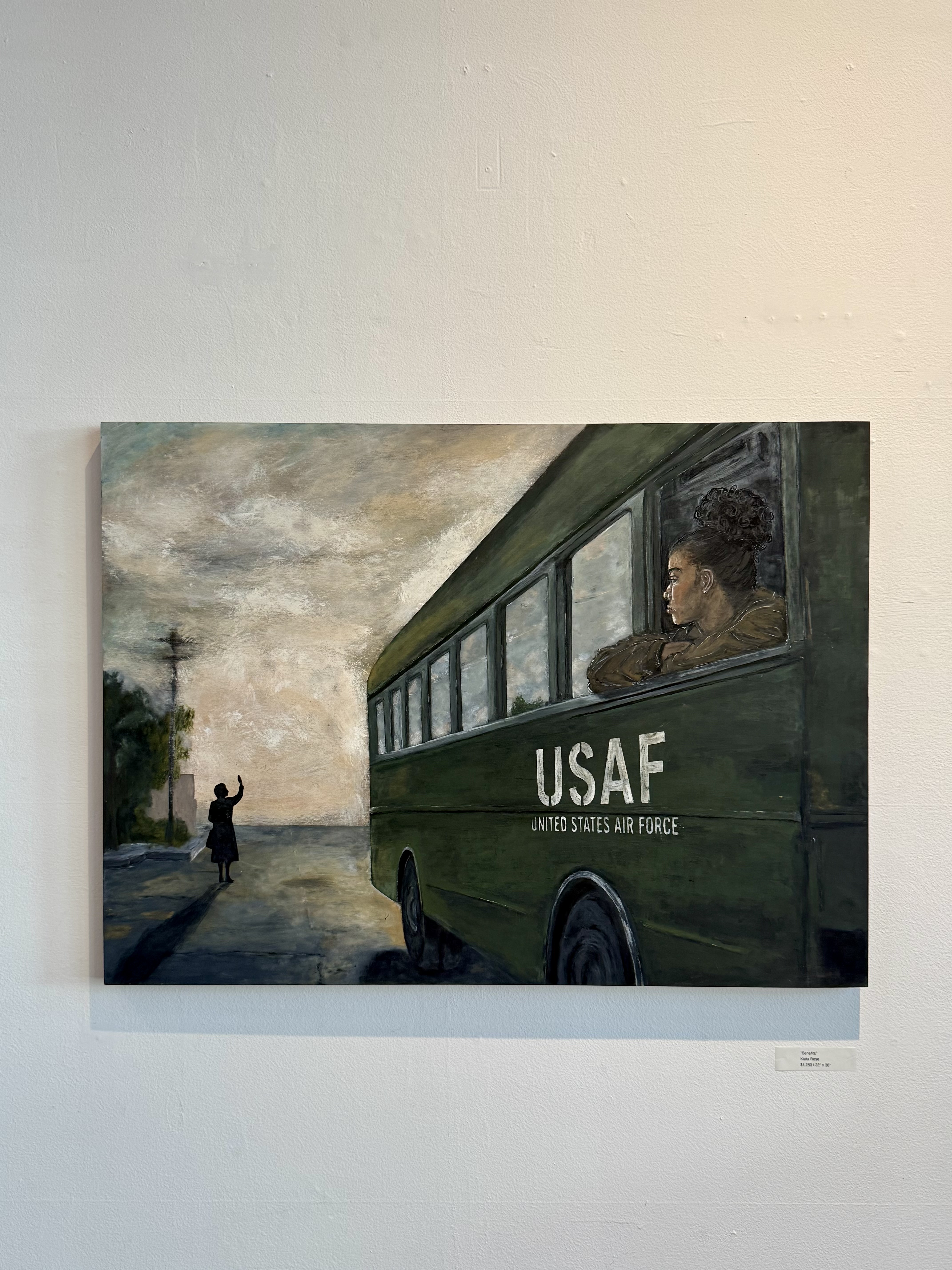
The exhibition’s true emotional weight lies in its willingness to sit with the shadows. Adulthood is rarely a smooth transition. Keita Rose paints this truth palpably, capturing the friction, burdens, and bittersweet emotions of coming of age. Quiet and powerful, her piece is a somber reflection of “goodbye.” Leaving home to embark on a new journey into the not-yet-known life in the U.S. service. Her use of dark colors and army green feels moody and grounded.
“Benefits” Kieta Rose
This show avoids the trap of shallow empowerment and offers instead, a raw, deeply resonant truth about what it costs to survive one’s own evolution.
Exiting onto Peters Street, in the midnight air, it becomes clear that “Grown” is not a static destination or an age on an ID card. It is a continuous, unfolding process of growth— taking-in, breaking down, building up, and the beautiful exploration of autonomy.
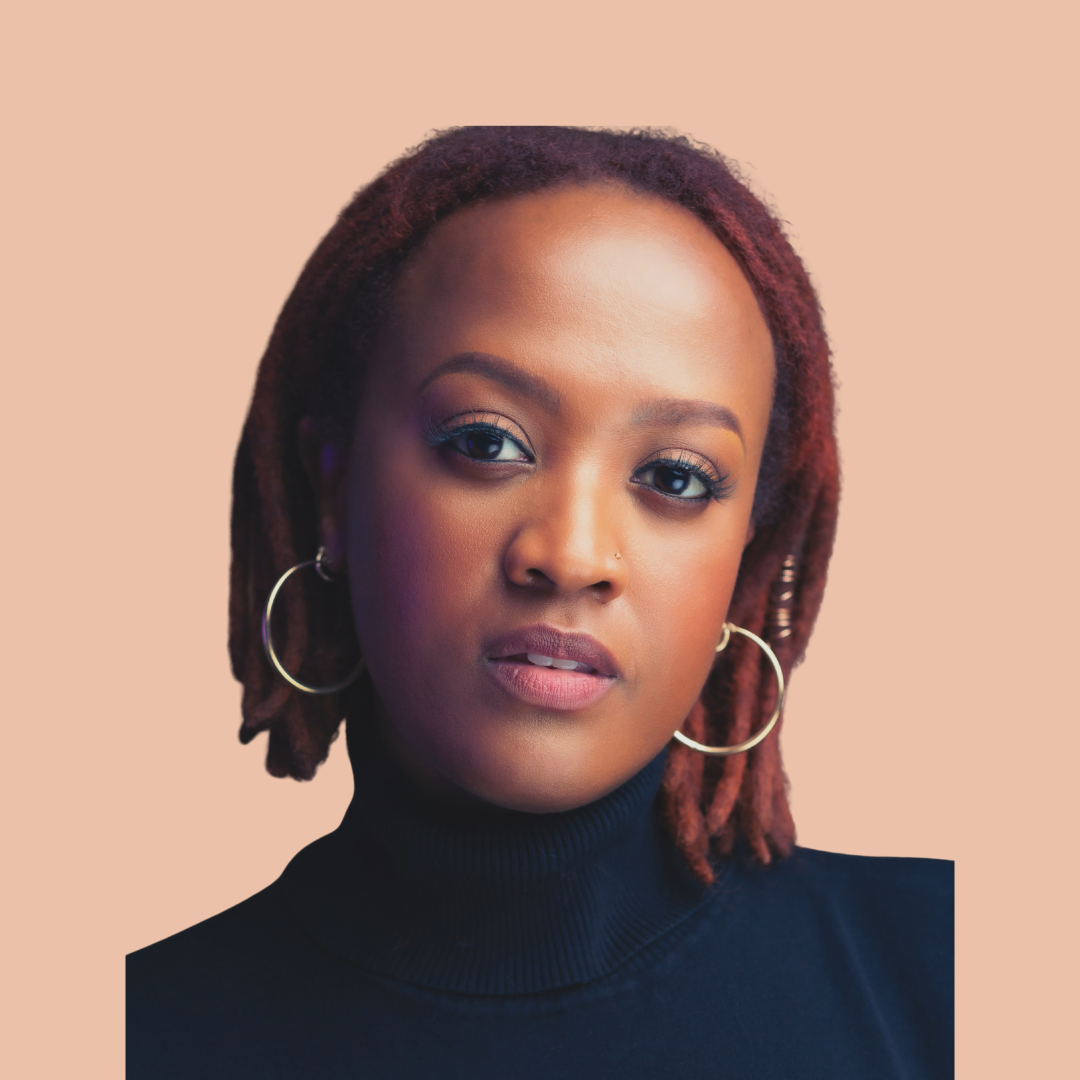
“I want the community to know how important true connection and good effort at being connected is… I want people to make sure that they’re looking back at their sisters and recognizing that they’re your sister, you know. She’s still there,” said Kaylah Hagler. “That’s really important for me as an artist. We can’t forget about each other. We’re all human beings first and then we’re artists,” she added.
“Heartbeats in Harmony: A Timeless Turnup” | Kiera Raming-Reed
The Young Hot Ebony Women’s Group Art Show will be at the Nina Baldwin Gallery until August 4th, 2026.
Subscribe to The Bold Opinion Media for more arts and culture deep dives in and around the metro Atlanta area.
Amy Sherald, a Columbus native, has chosen the High Museum of Art Atlanta as the final stop of her four-city “American Sublime” tour. As her largest display of works ranging throughout her career, this exhibition features several globally recognized pieces like of Breonna Taylor and Michelle Obama, plus rarely-viewed early works of grey-toned figures.
Painting the epitome of American life, Sherald approached this body of work with a reflective lens on the homeland typically observed through a Caucasian-American veil. Her monochromatic style of choice, grisaille, strips her subjects of bias while captured in simple moments of their daily lives.
“While Amy and her work have been present in Atlanta for many years, this will be the first opportunity to engage with the full measure of her practice,” said the High’s Director Rand Suffolk. “We are really proud to share that with Atlanta while celebrating an artist whose work so strongly resonated with our community,” he added.
American Core
For years, Sherald has analyzed American culture and who it chooses to project or represent it. With the use of grisaille, a paint technique that only uses grays, blacks, and whites, she bluntly challenges that representation. Her practice places African American figures in traditionally American places or activities; at work, by the pool, or on the playground. She approaches the thought of who or what people get to tell those stories in these simple moments. Sherald’s iconographies resurface the diversity of a true America.
Planes, Rockets, and the Spaces in Between, 2018
Kingdom, 2022
As mentioned, the exhibition contemporarily features both former First Lady, Michelle Obama and Miss Breonna Taylor’s portraits, not only as a way to further cement them into American history, but also to aureate their inner simplicity.
“I’m also thinking about all the young people–particularly girls and girls of color–who in years ahead will come to this place and they will look up and they will see an image of someone who looks like them hanging on the wall of this great American institution. I know the kind of impact that will have on their lives, because I was one of those girls,” she said.
Circling back to Atlanta as the final stop for her exhibition, “American Sublime” debut in 2024 by the San Francisco Museum of Modern Art (SFMOMA), then moved to the Whitney Museum of American Art, and the Baltimore Museum of Art before making its way to Sherald’s home state of Georgia.
Michelle LaVaughn Robinson Obama, 2018
“Bringing American Sublime to the High Museum is exciting because it is where my story began as a young art student in Columbus, Georgia,” said the artist. “As a former Atlantan, I’m looking forward to returning to celebrate the cultural and artistic power that is born in this city,” she added.
Visitors can view “American Sublime” at The High Museum of Art from May 15th – September 27th of this year and can find more information for their visit online.
Image Credits Header: Kevin Bulluck
Portrait images are compliments of The High Museum of Art Atlanta
Subscribe to The Bold Opinion Media for more arts and culture deep dives in and around the metro Atlanta area.
“You can’t talk about birth without talking about God; and God is a Black Woman.”
On the first weekend of May, Atlanta contemporary artist, Dr. Fahamu Pecou, debuted God Snapped When She Made Water… And Black Women during the city’s “Original First Saturday Art Walk” at Arthur Roger Gallery in New Orleans.
Birthed from his mother’s love, this body of work explores the appreciation and understanding of the Black Women as the building block of human existence. The declaration that She, like water, is an essential element that bends, nurtures, and replenishes.
In this exhibition, Pecou circles back to a pre-pandemic idea that had original intentions for Lyons Wier Gallery, but was intercepted by COVID19 and, in 2025, an opportunity for EXPO Chicago. A few pieces from God Snapped debuted in Chicago, but the overall concept and tribute to his mother was incomplete, until now.
“Word to the Motha” 2025
“Queen with the Crown” 2025
Digging back into his research and development, Pecou finds ways to marry previous works with fresh paint. Despite the lapse of time, God Snapped is taking on a newer developed identity, as he teases insight into future work.
“I have a new concept now, this sort of mindset that I was going to start for this show, but didn’t feel like I had enough time to really flesh it out,” said Pecou. “Then I realized that I never really did the ‘God Snapped’ show, so I wanted to bring that to its full realization,” he added.
Works
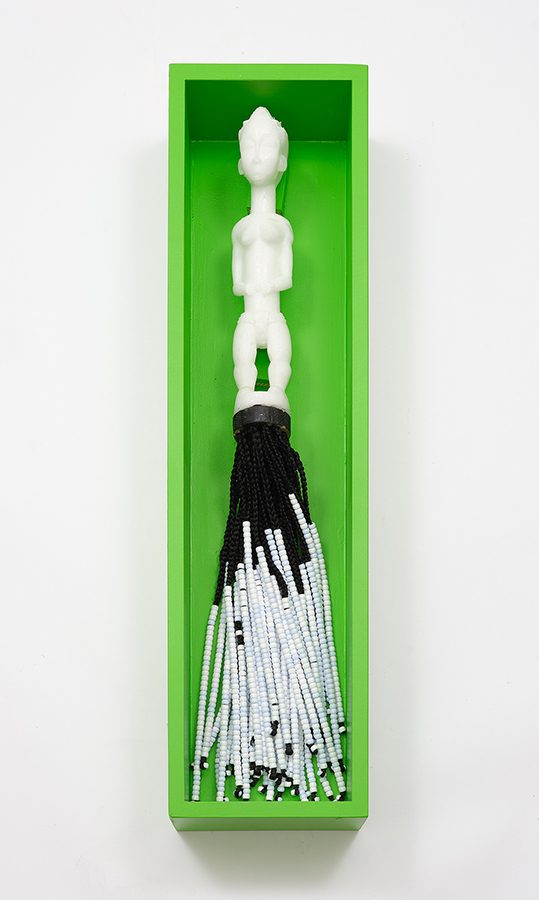
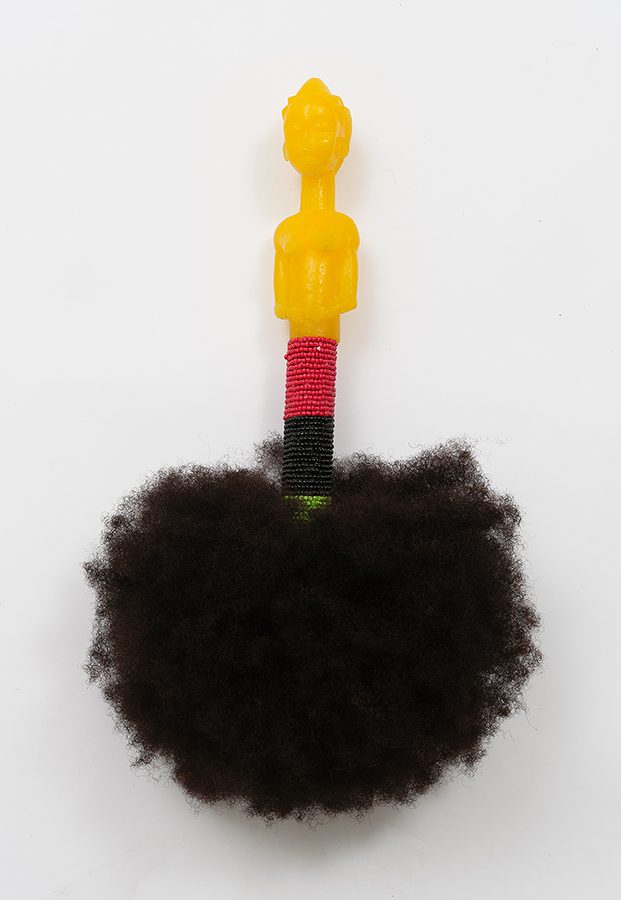
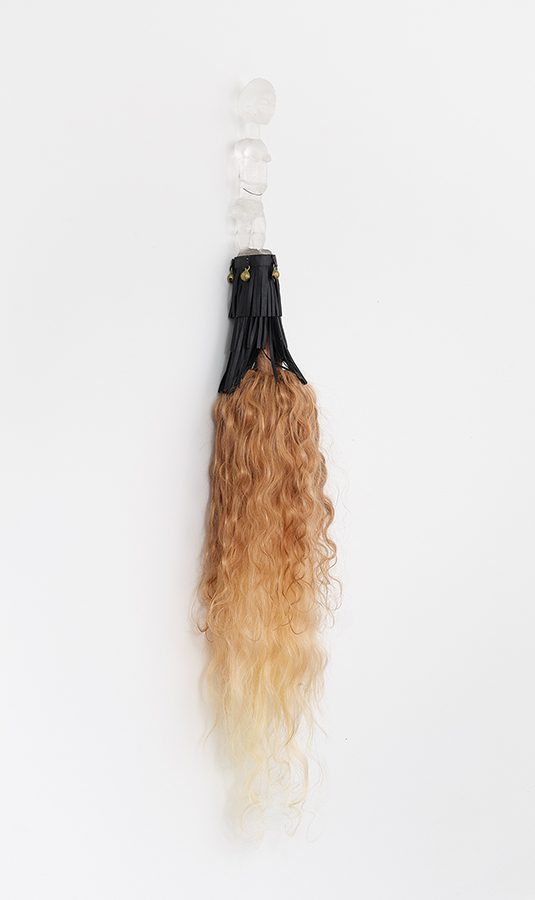
The Fly Girl Whisk
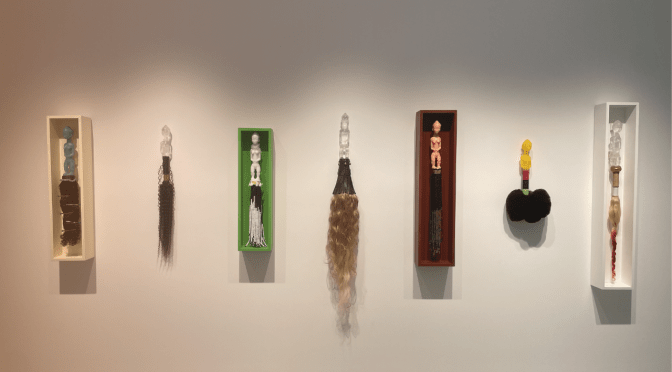
These pieces are resin-cast figures sitting a-top bundles of human and/or synthetic hair representing prominent, Black female icons. Their meanings are beaded, woven, and demand attention to the cultural diversity of Black women. Pecou braids this concept into the show by exploring hair as identity and a form of individualism. In his publishing of “Fly Girl:” in The Re/Write, he mentions Black women’s use of bonnets and head coverings that are rooted in their own historical significance.
“Fly Girl Whisk: Venus Williams 2026”
“Fly Girl Whisk: Angela Davis 2026”
“Fly Girl Whisk: Beyonce 2026”
In 1786 New Orleans, the Tignon Laws were passed to force Black women to cover their hair with wraps called tignons. It was a systematic way to strip them of their cultural identity. In response to these new rules, Black women transformed these wraps into elaborate icons of expression adorned with patterns and textures. They’d set a trend that is still alive today.
“I think New Orleans is a very special place where the magic and power of Black Women is known and understood, it’s just not often stated,” said Pecou. “It gets co-opted by others, but we know what it is,” he added.
Two hundred and forty years ago, Black women’s hair was suppressed. Today, it’s liberated. The pieces in God Snapped, by design, are tignon-free.
Style
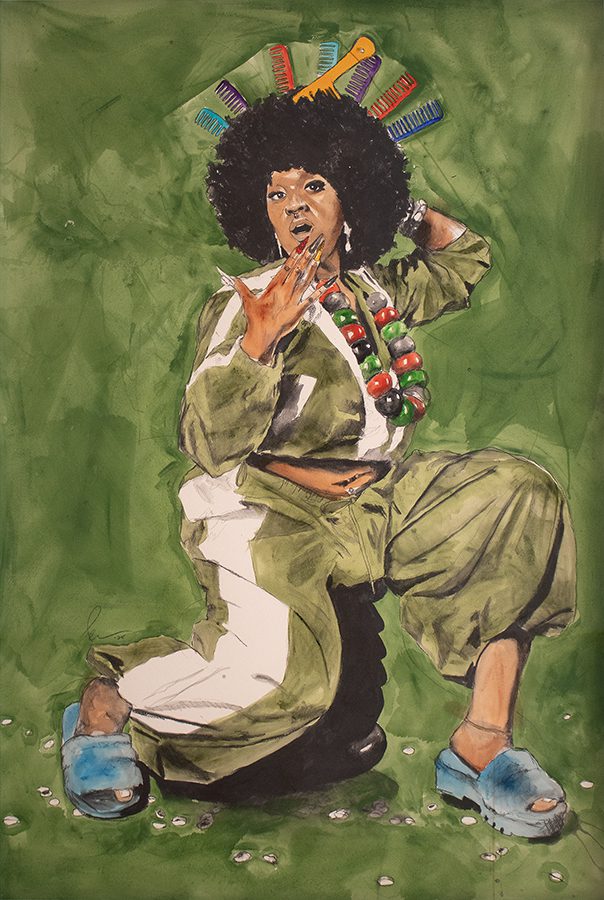
Pecou’s style is consistent throughout his work and in this exhibition. Easily identifiable themes include the use of cowrie shells, mixed mediums, and 3D elements. These themes are deeply connected to Blackness and God Snapped brings diasporic femininity to the forefront.
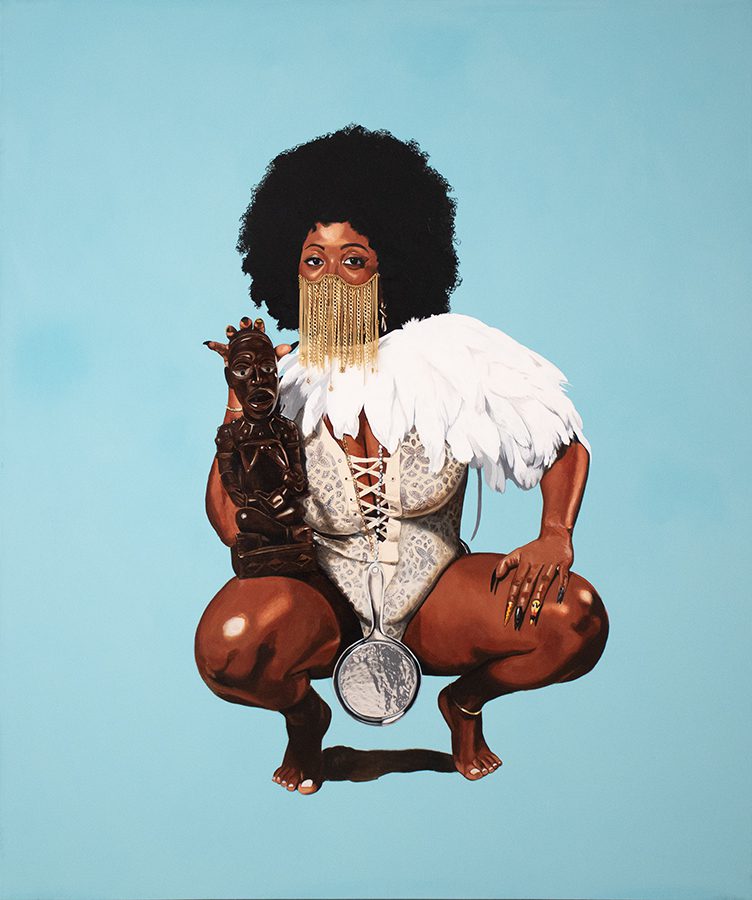
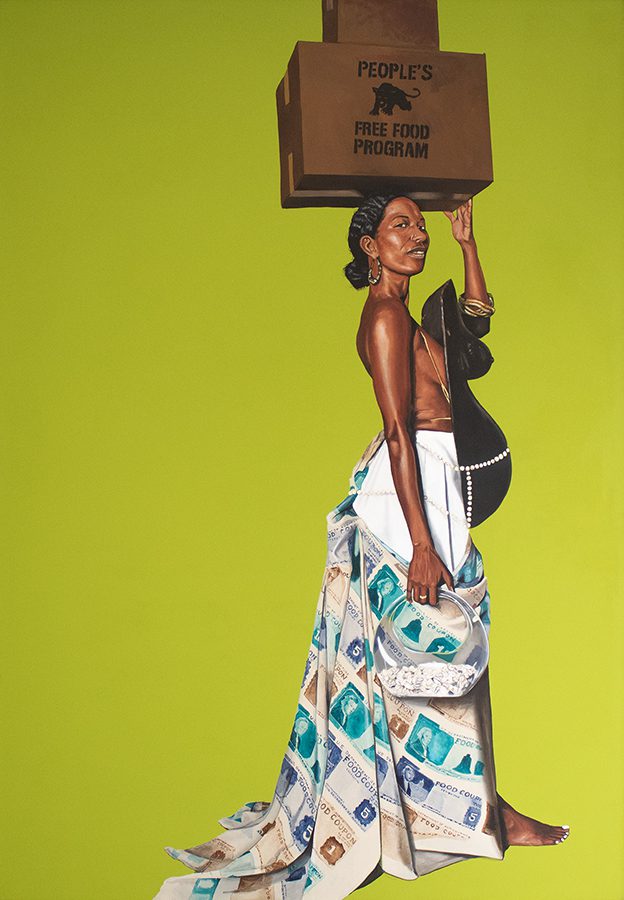
Cowrie shells once held trade power throughout Africa, Asia, and Oceania dating back as early as the 14th century. They are microbeacons of currency sprinkled throughout the entire diaspora and Pecou bears the same respect. This reality is obvious in Well Fared Queen, where the subject carries a transparent purse filled with the shells as a couponed cloth is pictured as her train.
“‘Well Fared Queen’ is an obvious kick in the nuts to this notion of a welfare queen and it being something that’s looked down upon as a way of degrading Black women that may be in poverty. I was raised by these women. I know they make a way when there is no way and more often than not, it is their efforts, ideas, style, tenacity, their gumption that people desire,” said Pecou.
“Well Fared Queen 2026”
At a towering 96 inches tall, this piece was powerful enough for the artist to include the cowrie-filled bag as a standalone sculpture on top of a Bamileke feather wooden stool. This stool also appears in Queen with the Crown, a nod to Pecou’s ability to symbolically migrate elements from one piece to another.
“I wanted to highlight that Black women, in particular, represent the most authentic form of Blackness. Not attempting to be something else, chasing after somebody else’s image or ideal,” said Pecou. “She’s very comfortable in her own being,” he added.
Also to be noted, the mixed use of graphite and acrylic showcases the artist’s versatility in his way of work. The pieces work together to bring texture and dimension into the conversation. Viewers are invited to discover in layers and through a variety of lenses by blending reality and imagination.
Blending The Old, The New & The Future
Although this entire body of workwas interrupted, as previously mentioned, Pecou found ways to blend and pick up on previous ideas to give God Snapped, in his opinion, what she deserved.
“Even though those pieces weren’t new, they’ve always been part of this collection,” said Pecou. “I just allowed myself to go into the references and research the materials that I had stashed away and bring them back out to really flesh out the idea,” he added.
The addition of At Least 2 Pair, Motha, Well Fared Queen, Fly Girl Whisk: Beyonce, Fly Girl Whisk: Solange, Fly Girl Whisk: Venus Williams, and Final Form completed what he’d started years ago and even hinting toward future concepts through the introduction of new visual elements.
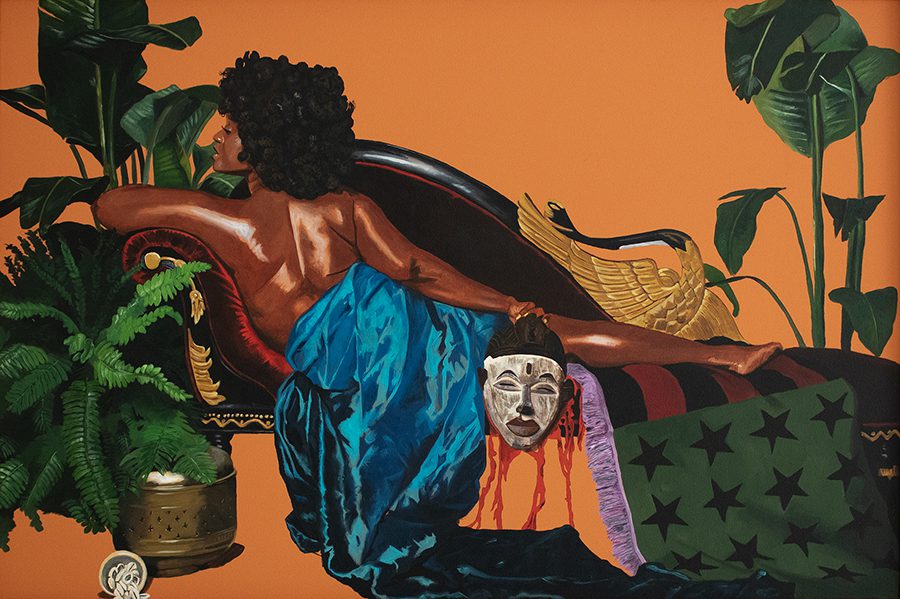
During the show’s opening reception, viewers seemed to keep circling back to the Final Form piece with animated gestures and verbal commentary. Visually different from the other paintings, this piece gives viewers more to observe with complimentary components. The use of lush, tropical foliage introduces a sense of Earthiness to the conversation while other symbols spark deeper debate.
“Final Form is an inside joke that a friend of mine and I have. We talk about, if one is to believe in reincarnation, and we come back in different forms every time we return, the epitome, the goal you want to get to, the final form, is a Black Woman,” said Pecou. “This piece is about that concept,” he added.
This painting has much to dissect, but these symbols are easily observed:
A Mask – Although cliche, it’s meaningful and gives the subject transformative implications.
A Golden Swan – An ancient symbol of grace, elegance, and the strongest form of love.
A Pan-African Flag Throw – An unmistakable symbol adopted by the UNIA in 1920 that boasts colors synonymous to identity, and in the case of this piece, Her people
“Final Form 2026”
Final Form displays differently and evokes a softer form of power than the more common stances the artist gives his subjects. There’s a likeness to a classical trope called an Odelisque, which depicts a nude-presenting woman lounging surrounded by other symbols of luxury or femininity. In Pecou’s God Snapped, this is a heavy suggestion of what God, a Black Woman, would be doing at any given time.
“There’s nothing, no one quite like a Black woman. Even without trying, here grace, majesty, and magic is effortless,” said Pecou. “It stops you in your tracks because it is the apex, the goal, the aspiration, so I wanted to capture that feeling in that piece,” he concluded.
During the opening reception, the artist hinted toward an earlier concept that he could have used for this particular exhibition, but put it on reserve. Final Form could be a peek into Pecou’s future where works become more scenic and subjects are observed with more use of imagination.
“This is kind of like the seed breaking ground of a new way of being, thinking and seeing,” said Pecou.
About The Artist
Dr. Fahamu Pecou is an Atlanta-based interdisciplinary artist by way of Brooklyn, New York whose work explores the identity of Blackness through culture, art history, and the African diaspora. He is the founder and Executive Director of the African Diaspora Art Museum of Atlanta (ADAMA).
Find his work online and visit the ADAMA museum in the Pittsburgh community of Atlanta.
Information on the First Saturday Art Walks in New Orleans and their seventeen participating galleries on their website and the Arthur Roger Gallery exhibitions online as well.
Gallery images are compliments of Arthur Roger Gallery.
Subscribe to The Bold Opinion Media for more arts and culture deep dives in and around the metro Atlanta area.




 Boldly Curated Media