
EIC, The Bold Opinion
“You can’t talk about birth without talking about God; and God is a Black Woman.”
On the first weekend of May, Atlanta contemporary artist, Dr. Fahamu Pecou, debuted God Snapped When She Made Water… And Black Women during the city’s “Original First Saturday Art Walk” at Arthur Roger Gallery in New Orleans.
Birthed from his mother’s love, this body of work explores the appreciation and understanding of the Black Women as the building block of human existence. The declaration that She, like water, is an essential element that bends, nurtures, and replenishes.
In this exhibition, Pecou circles back to a pre-pandemic idea that had original intentions for Lyons Wier Gallery, but was intercepted by COVID19 and, in 2025, an opportunity for EXPO Chicago. A few pieces from God Snapped debuted in Chicago, but the overall concept and tribute to his mother was incomplete, until now.
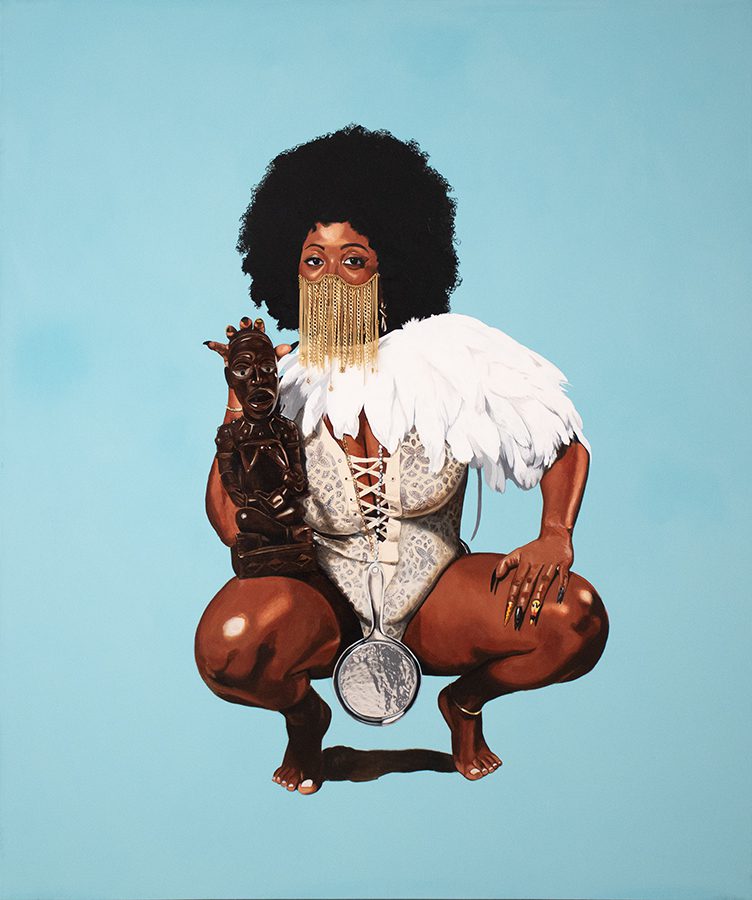
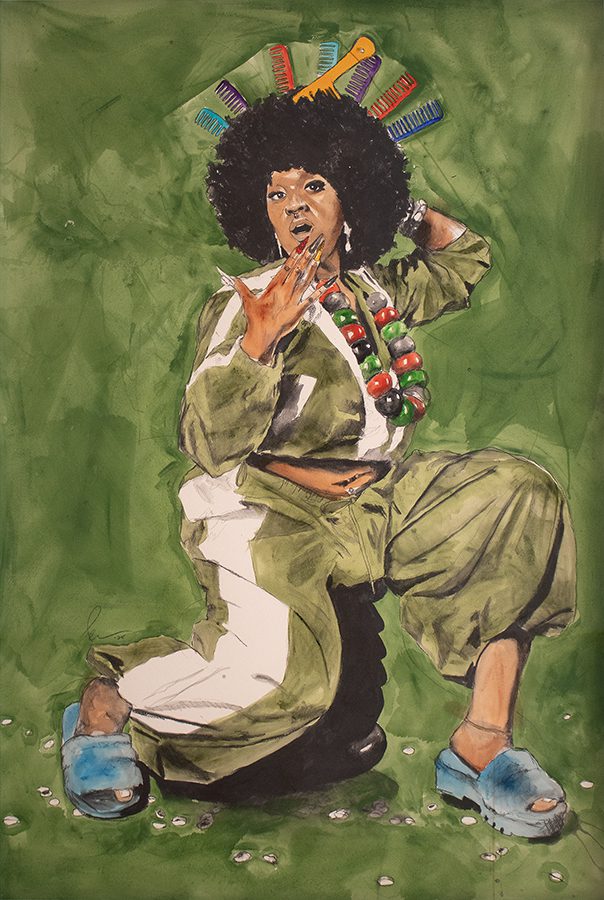
Digging back into his research and development, Pecou finds ways to marry previous works with fresh paint. Despite the lapse of time, God Snapped is taking on a newer developed identity, as he teases insight into future work.
“I have a new concept now, this sort of mindset that I was going to start for this show, but didn’t feel like I had enough time to really flesh it out,” said Pecou. “Then I realized that I never really did the ‘God Snapped’ show, so I wanted to bring that to its full realization,” he added.
Works
The Fly Girl Whisk
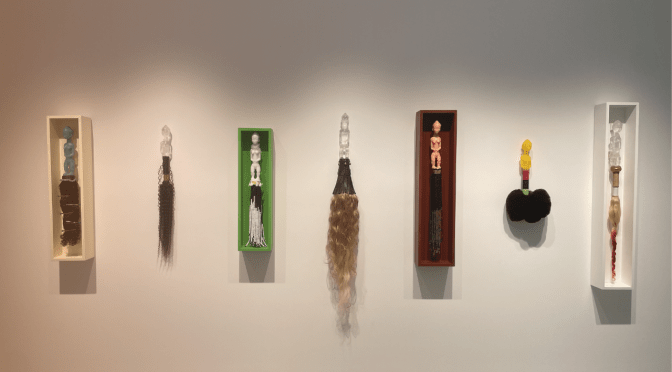
These pieces are resin-cast figures sitting a-top bundles of human and/or synthetic hair representing prominent, Black female icons. Their meanings are beaded, woven, and demand attention to the cultural diversity of Black women. Pecou braids this concept into the show by exploring hair as identity and a form of individualism. In his publishing of “Fly Girl:” in The Re/Write, he mentions Black women’s use of bonnets and head coverings that are rooted in their own historical significance.
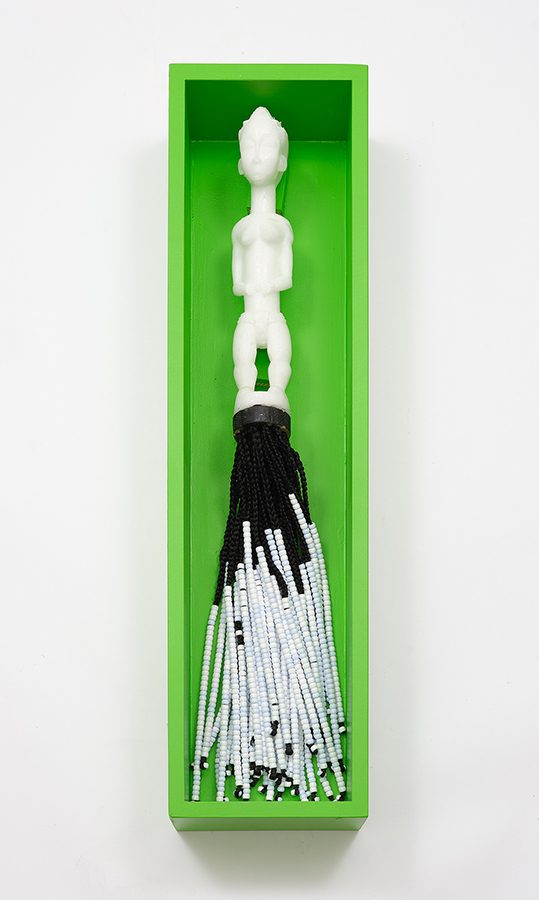
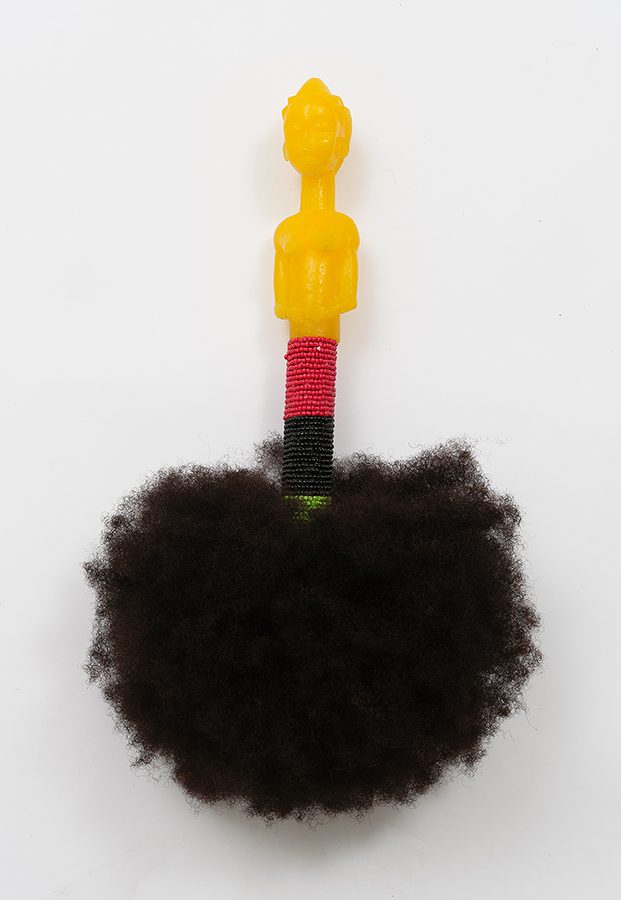
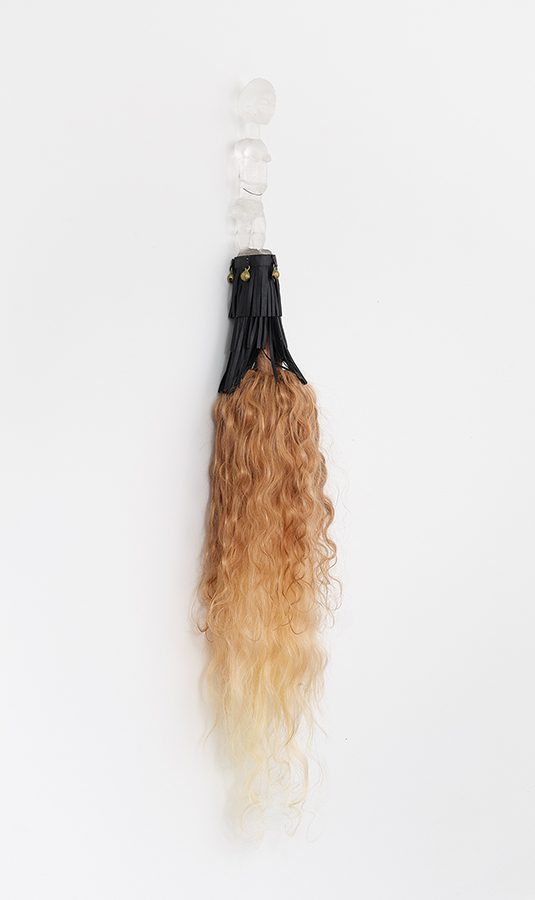
In 1786 New Orleans, the Tignon Laws were passed to force Black women to cover their hair with wraps called tignons. It was a systematic way to strip them of their cultural identity. In response to these new rules, Black women transformed these wraps into elaborate icons of expression adorned with patterns and textures. They’d set a trend that is still alive today.
“I think New Orleans is a very special place where the magic and power of Black Women is known and understood, it’s just not often stated,” said Pecou. “It gets co-opted by others, but we know what it is,” he added.
Two hundred and forty years ago, Black women’s hair was suppressed. Today, it’s liberated. The pieces in God Snapped, by design, are tignon-free.
Style
Pecou’s style is consistent throughout his work and in this exhibition. Easily identifiable themes include the use of cowrie shells, mixed mediums, and 3D elements. These themes are deeply connected to Blackness and God Snapped brings diasporic femininity to the forefront.
Cowrie shells once held trade power throughout Africa, Asia, and Oceania dating back as early as the 14th century. They are microbeacons of currency sprinkled throughout the entire diaspora and Pecou bears the same respect. This reality is obvious in Well Fared Queen, where the subject carries a transparent purse filled with the shells as a couponed cloth is pictured as her train.
“‘Well Fared Queen’ is an obvious kick in the nuts to this notion of a welfare queen and it being something that’s looked down upon as a way of degrading Black women that may be in poverty. I was raised by these women. I know they make a way when there is no way and more often than not, it is their efforts, ideas, style, tenacity, their gumption that people desire,” said Pecou.
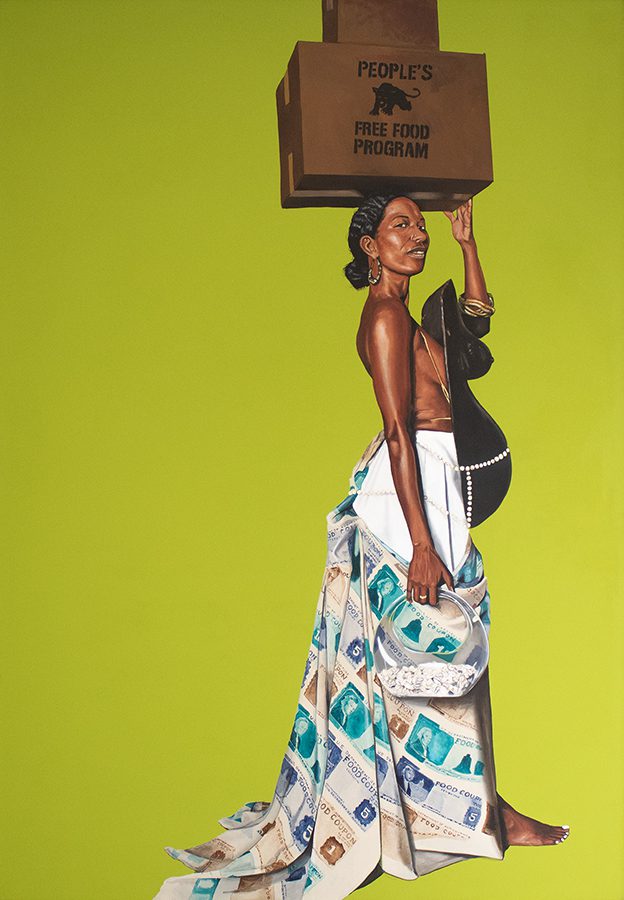
At a towering 96 inches tall, this piece was powerful enough for the artist to include the cowrie-filled bag as a standalone sculpture on top of a Bamileke feather wooden stool. This stool also appears in Queen with the Crown, a nod to Pecou’s ability to symbolically migrate elements from one piece to another.
“I wanted to highlight that Black women, in particular, represent the most authentic form of Blackness. Not attempting to be something else, chasing after somebody else’s image or ideal,” said Pecou. “She’s very comfortable in her own being,” he added.
Also to be noted, the mixed use of graphite and acrylic showcases the artist’s versatility in his way of work. The pieces work together to bring texture and dimension into the conversation. Viewers are invited to discover in layers and through a variety of lenses by blending reality and imagination.
Blending The Old, The New & The Future
Although this entire body of work was interrupted, as previously mentioned, Pecou found ways to blend and pick up on previous ideas to give God Snapped, in his opinion, what she deserved.
“Even though those pieces weren’t new, they’ve always been part of this collection,” said Pecou. “I just allowed myself to go into the references and research the materials that I had stashed away and bring them back out to really flesh out the idea,” he added.
The addition of At Least 2 Pair, Motha, Well Fared Queen, Fly Girl Whisk: Beyonce, Fly Girl Whisk: Solange, Fly Girl Whisk: Venus Williams, and Final Form completed what he’d started years ago and even hinting toward future concepts through the introduction of new visual elements.
During the show’s opening reception, viewers seemed to keep circling back to the Final Form piece with animated gestures and verbal commentary. Visually different from the other paintings, this piece gives viewers more to observe with complimentary components. The use of lush, tropical foliage introduces a sense of Earthiness to the conversation while other symbols spark deeper debate.
“Final Form is an inside joke that a friend of mine and I have. We talk about, if one is to believe in reincarnation, and we come back in different forms every time we return, the epitome, the goal you want to get to, the final form, is a Black Woman,” said Pecou. “This piece is about that concept,” he added.
This painting has much to dissect, but these symbols are easily observed:
A Mask – Although cliche, it’s meaningful and gives the subject transformative implications.
A Golden Swan – An ancient symbol of grace, elegance, and the strongest form of love.
A Pan-African Flag Throw – An unmistakable symbol adopted by the UNIA in 1920 that boasts colors synonymous to identity, and in the case of this piece, Her people
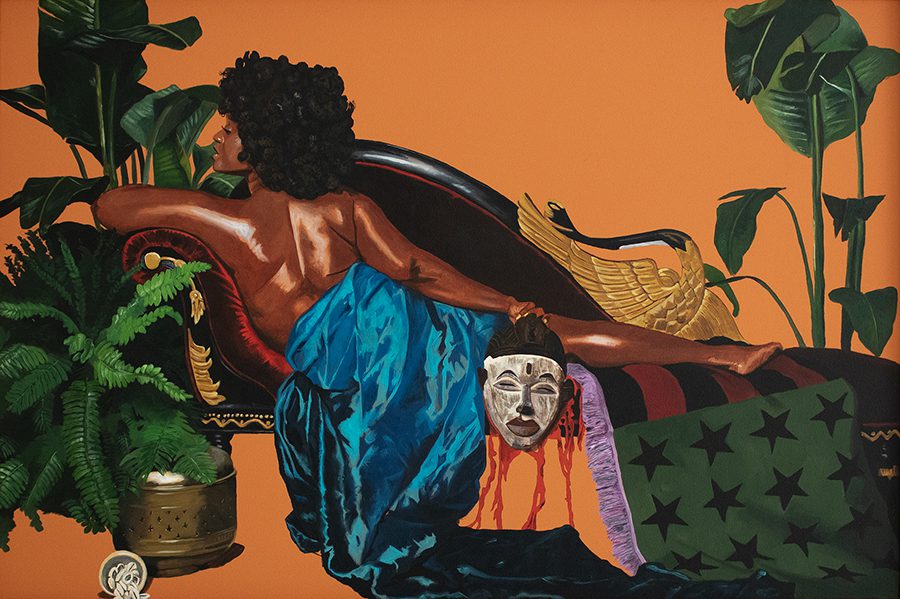
Final Form displays differently and evokes a softer form of power than the more common stances the artist gives his subjects. There’s a likeness to a classical trope called an Odelisque, which depicts a nude-presenting woman lounging surrounded by other symbols of luxury or femininity. In Pecou’s God Snapped, this is a heavy suggestion of what God, a Black Woman, would be doing at any given time.
“There’s nothing, no one quite like a Black woman. Even without trying, here grace, majesty, and magic is effortless,” said Pecou. “It stops you in your tracks because it is the apex, the goal, the aspiration, so I wanted to capture that feeling in that piece,” he concluded.
During the opening reception, the artist hinted toward an earlier concept that he could have used for this particular exhibition, but put it on reserve. Final Form could be a peek into Pecou’s future where works become more scenic and subjects are observed with more use of imagination.
“This is kind of like the seed breaking ground of a new way of being, thinking and seeing,” said Pecou.
About The Artist
Dr. Fahamu Pecou is an Atlanta-based interdisciplinary artist by way of Brooklyn, New York whose work explores the identity of Blackness through culture, art history, and the African diaspora. He is the founder and Executive Director of the African Diaspora Art Museum of Atlanta (ADAMA).
Find his work online and visit the ADAMA museum in the Pittsburgh community of Atlanta.
Information on the First Saturday Art Walks in New Orleans and their seventeen participating galleries on their website and the Arthur Roger Gallery exhibitions online as well.
Gallery images are compliments of Arthur Roger Gallery.
 Boldly Curated Media